It's Thursday night. You open the fridge and there it is: the half bunch of cilantro you bought Sunday, now looking like it's been through something. Behind it, two peaches that needed to be eaten yesterday.
You close the fridge. You order takeout. The cilantro goes in the bin on Saturday.
If that scene feels familiar, you're in good company. The average Canadian family throws away $1,500 worth of food every year. That's a flight somewhere warm or a month of groceries.
Earth Week feels like the right moment to talk about it. Not with guilt, because guilt has never once helped anyone cook dinner. Just with three things that actually work.
1. Treat leftovers as a head start, not a second thought
The mindset shift first, because the rest follows from it. Stop thinking of leftovers as leftovers. Start thinking of them as tomorrow's meal already half-made.
That half bunch of herbs, the soft fruit, the roasted veg from Tuesday. Those aren't scraps. They're a shortcut, which is a gift when life moves the way it does.
A few of my go-to moves when the fridge is looking chaotic on a Wednesday:
Wrap or sandwich. Leftover protein, whatever vegetables are lingering, a good sauce. Five minutes. Done.
Over rice or pasta. A grain base and a drizzle of something delicious turns last night's sides into tonight's bowl. This Veggie Tray Pasta is one of my favourites!
Into eggs. Frittata, scramble, egg bites. Vegetables, herbs, and eggs are a modern day love story. Whatever's in the fridge belongs in a pan with some eggs.
Power bowl. Throw leftovers over greens, add a dressing, call it intentional. Sounds a lot more exciting than "fridge clean-out" and tastes just as good. It’s all about the dressing anyways. Click here for my favourites!

2. Rescue fruit before it turns
Soft fruit isn't ruined fruit. It's usually sweeter fruit, and it has more potential than we give it credit for.
Overripe berries go straight into the blender for a smoothie, or stirred into overnight oats the next morning.
Peaches, mango, or banana going soft get pan-roasted with a drizzle of honey and served over yogurt or pancakes. Takes minutes but is such an easy way to elevate things!
Leftover fruit salad gets stirred into chia pudding for a breakfast that feels like it was planned all along.
Herbs on their way out get chopped and frozen before they go. Frozen herbs work beautifully in soups, sauces, and scrambled eggs.
The through-line: nothing in the fruit bowl or the herb drawer needs to become compost. It just needs a quicker plan.
3. Shop with a plan, not with hope
This is the one that moves the needle most, and it's the one not enough people talk about.
The real reason food ends up in the bin isn't laziness. It's that we shop with optimism. Tuesday looks open on Sunday morning. Then soccer practice runs long. Wednesday's meeting goes sideways. By Thursday, the cilantro is a lost cause and you're staring at a takeout menu.
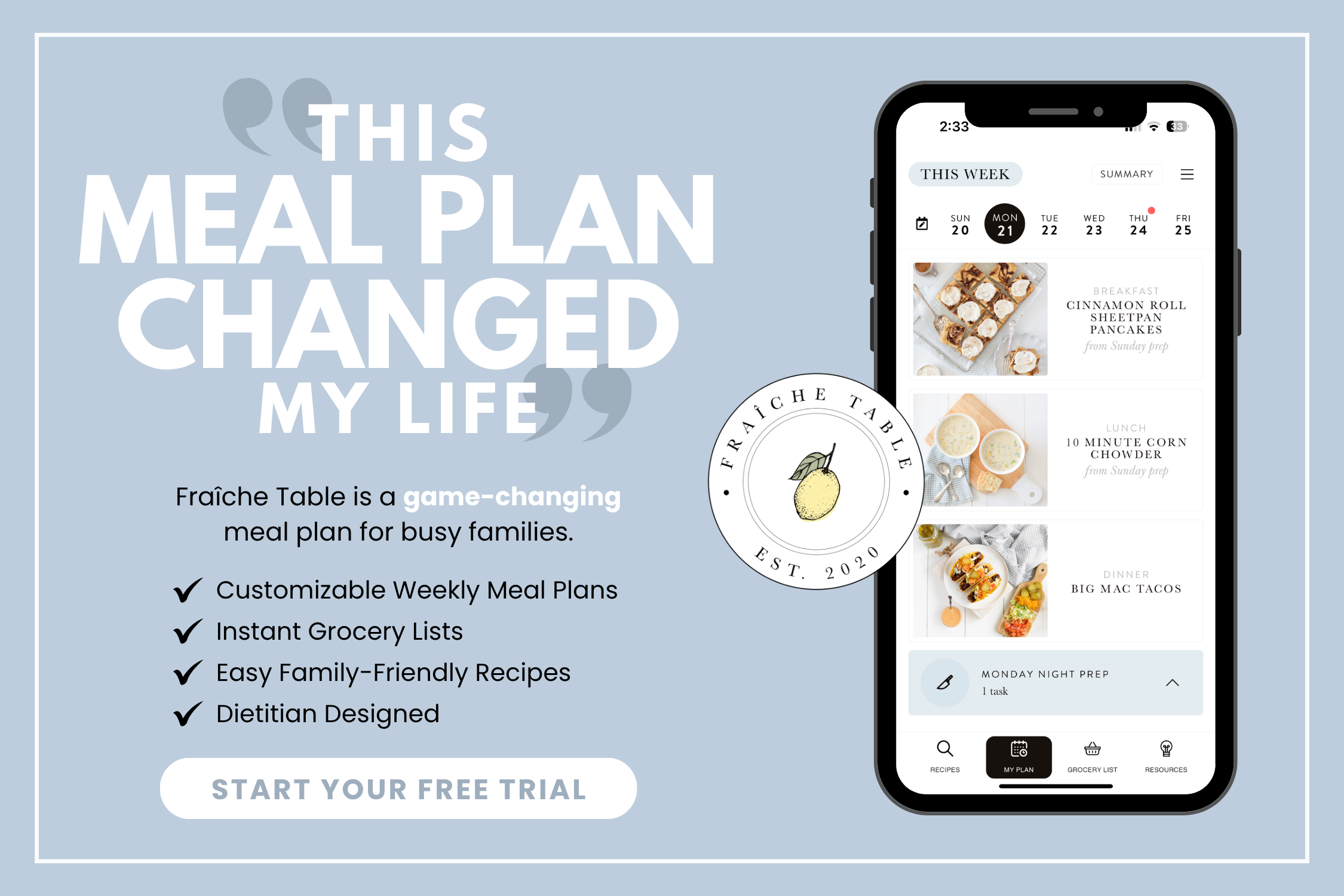
Planning your meals for the week fixes this at the root. You buy exactly what you need. Ingredients overlap across recipes instead of sitting alone in the crisper. That bunch of cilantro gets used three times, not once. Nothing expires before you get to it.
The weeks I plan, my grocery bill drops by about $40 and almost nothing hits the bin. The weeks I wing it, I already know how Thursday ends.

Three small shifts. A mindset, a rescue plan, and a list. That's it.
Happy Earth Week from all of us at Fraîche Table. 🌱
P.S. Every Fraîche Table menu is built with food waste in mind. Grocery lists are designed so ingredients overlap across the week, which means less in the bin and more in the meals you actually eat. If you want to see how it works, the first 10 days are free. Click here to give it at try!